%20-%20120%20x%2044.svg)
We have added a Statement filter to the invoices filters used when allocating a payment which allows you to quickly pay invoices that relate to a specific statement. This filter is perfect for users who use our statements feature to invoice third parties or companies as it allows you to quickly apply a bulk payment from those companies to the invoices specific to a statement.
💡Tip: For client statements, open the client profile. For contact or third-party statements, open the full contact or third-party profile where the statement was created.
1. Create a payment as you normally would, either
-
via Billing > New Payment,
-
via ➕ icon > Payment,
-
or via Client, Contact or Third Party Profile > Billing > New Payment.
💡 You can also open an existing payment and edit it.
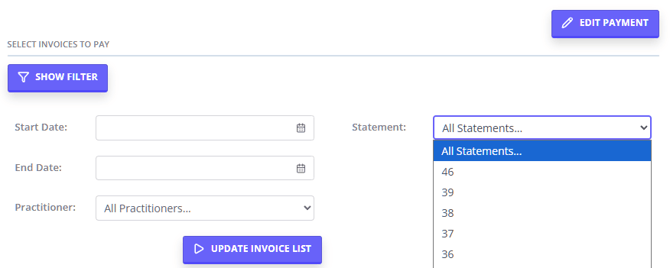
2. Click the 'Show Filter ' button. The filter fields are hidden until you do.
You will then be given access to the varying filters including the Statement filter.
3. Choose the statement number from the Statement: dropdown. It shows All Statements... until you pick one, so an unfiltered list is the normal starting point.
4. Click Update invoice list. The invoice grid refreshes to show only the invoices on that statement. Choosing a statement on its own does not change the grid.
5. Tick the invoices you want to pay, or adjust the amounts in the grid, then click Save.
💡 Tip: Statement: is one of four filters, alongside Start Date: , End Date: and Practitioner: , and you can combine them. Filtering only changes what the grid displays, so you can clear a filter and click Update invoice list again at any point.
Troubleshooting
The statement number is not in the dropdown. The dropdown lists that payee's active statements only, so check the statement has been generated and is still active for the payee whose payment you are entering.
An invoice you expected is not in the grid. It is either not on the statement you selected, or it has already been paid by a different payment. The grid shows the payee's unpaid invoices plus any invoices already allocated to the payment you are editing, so an invoice settled by another payment does not appear.
Related Articles
- Creating Statements Billed to Third Parties - Generate the statements this filter uses.
- Taking Prepayments or Bulk Payments - Allocate a single payment across several invoices.
- Adding and Managing Payments - Add, allocate and reallocate payments.